"…his stories are always sharp and compact and interesting." ——Angel Martinez "(One of) the hottest authors in the independent horror scene…" —-Hellbound Books
Donna Reidel pointed and her husband Sean nodded. They were tired, hungry and spattered in mud. The last three days they had been threatened, evicted from a hotel room that wasn’t even theirs and shot at.
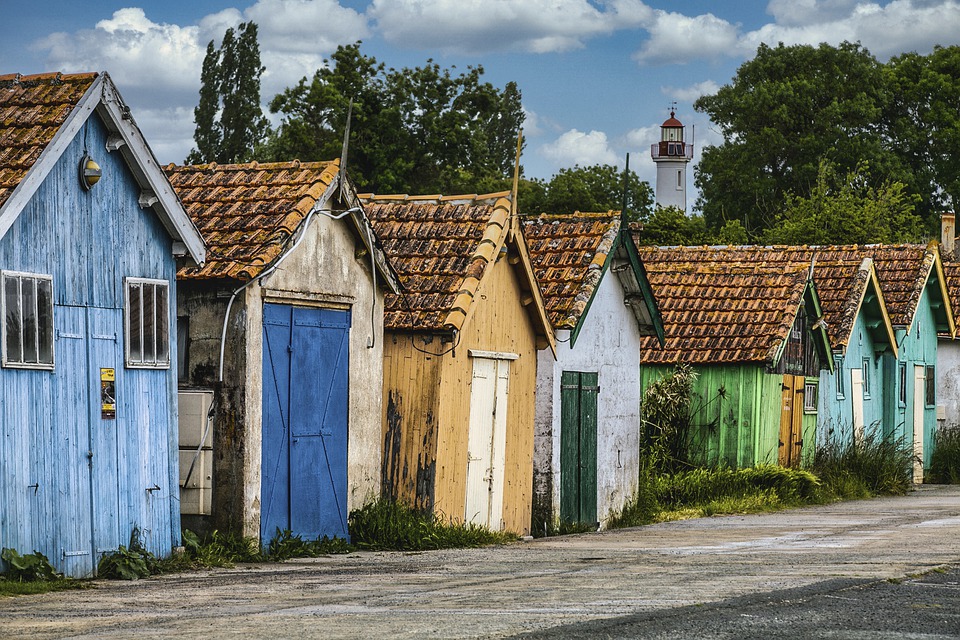
“Of course, shot at,” Donna thought as she tried the door of the house on the end. It wouldn’t budge. The long row of houses were about the size of tool sheds and had been built in a long row on what looked like a poor man’s version of a boardwalk. But the little seaside town had been hit hard by the economic downturn; shops were closed, even the local school had been shuttered. From a distance, the town looked alive. Lighthouse beckoning ships into a safe harbor. But closer inspection revealed the boarded-up storefronts and the sealed-off door to the lighthouse, which was on automatic. After three days of tracking down leads, all Sean and Donna had found out was that what they were looking for was hidden “in the yellow house” near where the man had been found on the beach, dead. He’d lived here as a kid. Sean and Donna had been hired to find what he had stolen.
They hadn’t even been told exactly what they were looking for. “You’ll know it when you see it.”
Seeing it was the problem. And it didn’t help that the houses had all been repainted so many times that they all had some yellow paint flaking off. Donna and Sean couldn’t break into all of them. Only one house was important enough.
“We may not have time,” Donna said. “But we have to wait.”
It was warm for early spring, but dusk came early. Donna and Sean stayed hidden in the shadows. When it was dark enough
“Funny thing about a beam of light,” Sean said. “In spite of how it’s drawn in the comic books, a beam of light is usually a bluish-white, like the Moon.”
“But not that one,” Donna said, pointing at the lighthouse.
The bright beam that shone out of the lighthouse was a blazing white as it shown over the sea, but when it swung over the town it suddenly angled down and swept the ground of the town, turning a bright yellow.
“A prism,” Donna said.
“Or a busted lens,” Sean said.
“One that he knew about.” Donna said.
The two of them watched the light repeat its track through the town, making sure it followed the same path each time. When they were sure, they went to the one of the small houses the yellow beam had lighted on and after a few minutes of lock picking were inside. The small room had a painted-over window and a small cot. On the cot was a brown envelope, In the beam of the Reidel’s flashlight, the envelope practically glistened like gold compared to the rest of the furnishings of the dingy room.
AUTHOR’S NOTE: The draws for this month’s Flash Fiction Draw Challenge (Thank you, Jeffrey Ricker!) were a comedy set in a car trunk involving a vacuum cleaner. I’ve used a lot of song titles as story titles but I never thought I’d use this one (changing one word!)—jsb 7/7/21
My Old Man’s The Dustman
by Jeff Baker
I adjusted my mask, pushed my helmet down on my head and ran down the row of parked cars in the mall parking lot.
“Pop!” I called out. “Pop!” I wished the noises from the highway weren’t so loud. Then I thought I heard it: a muffled noise.
“Pop?” I moved closer to the sound, a beat-up looking Chevy. I looked in the window. Nope. I caught a glance of myself in the reflection in the car window. Striped trunks, green cape, a stylized letter “D” on my shirt. Pop was the superhero with the powers. Me, I was an unwilling sidekick. Besides I had a business degree. I only helped Pop, a.k.a. The Dustman out when I was between jobs.
And now, he needed my help. Being able to turn into a stream of sentient dust wasn’t much of a power but it meant that he could filter himself anywhere. Last I heard, he was following some bad guy who called himself Kettleman. As long as nobody called me Dustboy. I was 27 and had my own portfolio with an IRA.
This time I heard it clearly; a thump from the rear of the Chevy.
“Pop?” I called.
“In here,” came the faint voice.
“Well, dust out of there,” I said. “Maybe you can’t fit through the lid but there’s got to be a little opening somewhere.”
“I’m already dust,” came the voice. “I’m stuck in here, pop the trunk and get me out!”
I didn’t know how Pop could talk when he was dust, but I was just glad his super outfit dusted with him so he wasn’t naked all the time.
“Captain Kettle or whatever he called himself had a vacuum cleaner,” the voice said. “I’m in that.”
My Pop was trapped. Inside a car trunk. Inside a vacuum cleaner. And this was a guy who’d saved the world with the Crisis Squad. I started laughing. I couldn’t help myself. I got a hold of myself.
“Okay, Pop, what do I do?” I asked.
“Break in the trunk and get me out!” Pop said.
“With what?” I asked. “I don’t carry a crowbar on this silly outfit!”
“Then, break into the car!”
“Hey, I don’t want to get a criminal record!” I protested. “You need a burglar, not an accountant! Hey, wait…”
I was looking through the car window, wondering if I could use a coat hanger. It was an old car, but then I had a hunch.
I tried the door handle.
Bingo! It opened. A minute’s fumbling under the dashboard and I found the lever that popped open the trunk. I was amazed this genius hadn’t left his keys in the ignition. I grabbed the hand vac out of the trunk and pulled it open. A cascade of greenish dust spewed out over me and the ground. I sneezed.
Another moment and the dust whirled itself into my Pop.
“Just like ‘I Dream of Jeannie,’” I said. “You okay?”
“Yeah,” my Pop, Dustman said. “How ‘bout you?”
“Fine.” I said. “Where’s this Kettledrum bozo?”
“In the mall paying a bill. Wanna help me get him?”
“Sure!” I said.
Pop grinned. “Okay, Dustboy, let’s get to it!”
My Pop and I ran towards the entrance, and I didn’t feel ridiculous at all.
Surprised myself by finishing and revising two (count ’em, two!!!) full-length short-stories and fired them off to their respective markets. One being the Saturday Evening Post (Fingers crossed!)
Also worked on a couple of the Flash Fiction stories, and finished one a few minutes ago!
I also need to proofread a couple of columns and work up the monthly Flash Fiction Draw Challenge story for July (which I’d forgotten about!)
I inhaled on the cheroot and blew the smoke out the open train window. I stared at the scenery. “Travel” certainly came from “travail,” no doubt about it. I’d had easier rides on horses.
A conductor stuck his head through the door of the train car.
“It’s up ahead, Mr. Murdoch. We’ll be slowing down as soon as we cross the bridge.”
Great. I grabbed my bedroll and headed towards the door. I stood on the platform as the train clackety-clacked across the bridge. Sure enough, the train began to slow down, but not as fast as I’d expected. Well, it was now or never.
I took a breath, gripped the bedroll and jumped. I hit the hillside and rolled in the tall grass. The bedroll helped break my fall, but not by much. I stopped rolling against a bush. If it started burning I could use a message. But never mind. It had worked. I was in and nobody saw me jump off the train.
I ran down the hill, keeping low. The ranch was on the other side of the hill. It was a long walk but I’d get there.
Despite the hills, the place was called Barracuda Flats. I’d gotten a message a few months ago from somebody I used to know who worked there as a ranch hand; the owner, Brewster, who I’d known during the War had run to Mexico. Brewster didn’t have any family and the new owners were claiming to be his nephews. Brewster had been an orphan. He’d joked about that years ago. The new owners kept a tight rein on the hands who were still there. I pulled out my watch and checked. 4:00p.m. The Sun would set soon. I had an appointment at midnight.
In the starry dark I could see the huge tree at the edge of the ranch property. It was, I heard, a local landmark. I crept up closely. It was midnight. I was supposed to meet Old Griggs, the ranch hand. I wandered around the tree. No sign of Griggs. Or anybody. I thought of calling his name. Then:
“Mr. Murdoch. About time.”
I spun around. Then I heard a whistle. I looked up. In the dim starlight, I could make out a face surrounded by a frizz of white hair. Griggs. In the tree.
“Didn’t want to be seen,” he said. When I’d last met him Griggs had been the age I was now; fifty-six. Now he looked ancient, like some gnarled being from folklore who would blend in with the tree. I jumped, grabbed a branch and pulled myself up where we were concealed by the leaves in the night.
I’m glad you came,” Griggs said. “Something bad happened to Mr. Brewster. And these new people, they’re up to something strange. Something bad.”
“Brewster didn’t run off to Mexico?” I asked.
“No. I dunno where he is. These new people, they have us tend to the cattle but they cleared out the old pens and they’re building…something. Something a good God wouldn’t want built on his green Earth.”
“What’s this something?” I asked.
“You need to see it,” Griggs said. “You have a place to stay?”
I nodded. I had my bedroll and there was water on the other side of the hill. Or I could sleep in this tree.
“Come down to the house right around dawn,” Griggs said. “These people aren’t real ranchers. They sleep in. You can see the thing.”
I thought about sleeping on the other side of the hill where I’d be out of sight from the ranch. Instead I stayed awake hidden in the tree all night, glad I’d slept on the train. The next morning, before dawn, I crept out to the ranch. A ranch without a lot of activity around dawn didn’t seem real somehow. I followed Griggs’ directions and found myself by a fence toward the back of one of the buildings, a building that used to house cattle.
I stared at where the pens had been. Instead, there was a wood and steel framework that reminded me of a catapult we’d rigged-up during the War. But there was no spring that I could see. Instead, it seemed like a support for a large metal rod that glistened in the sunlight and was angled so it was pointing just above the horizon, like a spear. I looked more closely; the tip of the spear was translucent and was gleaming from the inside like a lantern.
—end—
AUTHOR’S NOTE: Don’t have any idea where this is going! I’d been watching a few old Westerns on cable and I’d just finished writing a longer western story. I’ll write more on this some other day; I hadn’t planned on this going into steampunk territory but it may be doing that! I hadn’t planned on doing another serial story here either! By my count I have four official serial stories going, not counting series characters in short-stories! ——jsb, June 30, ‘21
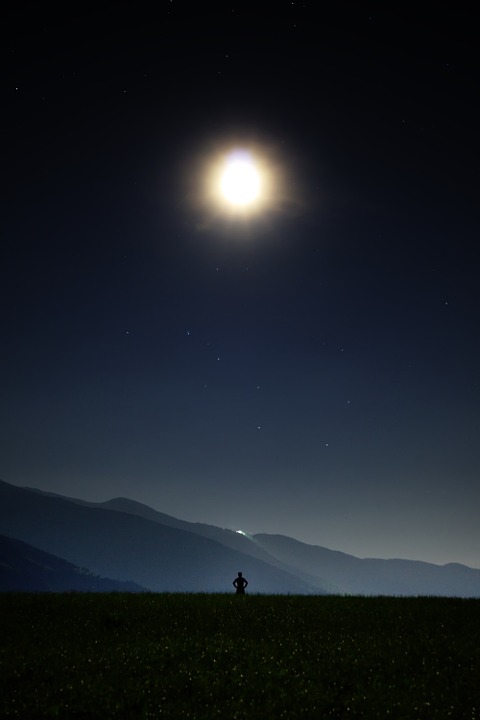
“I’ve been to the Moon, you know,” the old man sitting at the bar said sipping a whiskey.
Even for Demeter’s Bar that was an off-the-wall statement. Zack, the cute bartender with the long red hair glanced to the side and saw the television, hung next to the month’s poster of a hunky guy in skimpy swim trunks, showing a documentary about the Moon landing. He tried to remember all the astronauts he’d seen pictures of and figure if this white-haired old man was one of them. He didn’t recognize him, though.
“Hey, Mister R,” came a voice from the back booth. “Tell us how you made it up there again.”
The man at the bar waved for a refill and started in.
I was a young Air Force flier in 1959 (the man said.) when I received a communique to report to an office in the Pentagon. I was stationed at a base near D.C., and was told to just drive my car up there as if I was delivering something. When I got to the Pentagon I was quickly whisked to a basement office. In the large room I saw two generals and a figure in a blue suit who I recognized; the Vice President!
After some formal greetings, I was told that they had been keeping up on “my progress” and that I had been selected for a special and very secret mission. I would be piloting an experimental spacecraft in just a few days to the Moon!
I did not know what to say or believe. This was the tail end of the Fifties, remember, and President Kennedy and his pledge to land a man on the Moon were still two years away. Moon flights were the stuff of comic books and movies. And in those days, if they asked you didn’t tell. But I was told that I would not even be the first man on the Moon. The craft I would be flying, the Verne I they called it, was small and sleek like a fighter jet with a bay beneath. It was a sophisticated craft and it would take off like a jet, fly at an angle until it reached the edge of the Earth’s atmosphere. Then it would switch to automatic but still needed a pilot there or it would not be able to either take off or land.
I asked how long we had possessed such technology and how long we intended keeping it a secret, since this was beyond anything the Russians were supposed to have and anything we had. That question was not answered. Instead, I was informed that I would be taking a passenger.
“A co-Pilot,’ I said.
No, this was a passenger, I was told. In fact I would be dropping the passenger off on the Moon!
I had a million questions and was told to ask none of them. I was led from the room and driven to an airfield far out of the Capitol. I was told that the craft would not show up on any known radar and that I would be flying at night. And that my passenger would be traveling in the cargo bay beneath me. The Verne I (as they called it) would pass for a fighter jet at first glance or from a distance. I went into the cockpit to familiarize myself with the controls and got a shock; There was a standard set of aircraft controls to one side and a panel with lights and a small screen on the other side. There was a row of symbols above the lights that looked like no language I had ever seen. I was told that my test flight would be the flight to the Moon and that my passenger would be traveling in the cargo bay!
Two days later, just after one in the morning I entered the cockpit, attired in the usual flight suit instead of some pressure suit, which I was told would not be necessary. A few minutes later, the Verne I made a noise like air escaping from a hot air balloon and rose from the ground, aiming for the Moon and suddenly taking off at an incredible speed! To my astonishment I felt no G-forces, none of the familiar sensations associated with jet travel. Even more astounding was that as soon as we cleared the Earth’s atmosphere the speed increased so in less than a half-hour we were in orbit around the Moon. I saw the grey-blue-white of the day side speed past me and then we were over the dark side of the Moon. I could make out craters and mountains in the near-darkness as the craft slowed down and came in for a landing near the dark bulk of a Lunar mountain range.
I sat there and listened. For the duration of the flight, I had been unaware of my passenger, but now I heard a clunking and clanging beneath me as if someone was walking in metal boots. The craft shuddered and I heard the hiss of escaping air in the bay beneath me and in another moment I felt another vibration as (I assumed) the bay doors closed again. I heard the very definite hiss of tanks filling the bay up with air. I had looked around; there was seemingly no way to get into the bay from the cockpit. Through the cockpit window I could see the Lunar surface lit by the stars.
I stared. In the dim starlight I saw a lithe figure wearing some sort of spacesuit walking away from me. I could make out that the suit was the same gray as the Moon, and the helmet had an opaque panel at front, preventing me from seeing my passenger’s face. The figure stopped and turned and waved with an arm over it’s head. Then it turned and resumed walking towards the mountain. In another moment the lights on the panel flashed a pattern and the ship rose into the air and turned heading towards the Moon’s horizon. For an instant I could see the scene from above and caught a glimpse of a tower in the middle of the mountain range, a tower that looked man-made. I was convinced that the craft was not of Terrestrial origin, something that I felt confirmed when the Verne I landed at the airfield in the dead of night and I was greeted by a small group of military brass, including the Vice-President. (“The President wanted to be here, but he was detained,” he explained.) I was detailing what happened to the brass and the Vice-President had said something about the beginning of interstellar relations when I heard what sounded like a loud yawn and looked behind me as the Verne I shuddered, folded in on itself and crumbled to powder which blew away.
I was sworn to secrecy, so my commendation was unofficial. And I never told anyone, not during two tours of Vietnam and all the years that followed. I never heard another word about the extraterrestrial craft of, what I assumed to be, the alien base on the Moon. But I did notice that none of the subsequent official Moon landings went anywhere near the mountain with it’s tower and unfathomable secrets.
Mr. R finished his story, took a final sip of his whiskey and stepped off the bar stool.
“Which is probably good because after all these years, I don’t think we are ready for those secrets yet,” he said sticking a few dollars in the tip jar.
“Hey,” came the voice from the booth. “If you really went to the moon, did you get a Moon rock or something?”
“Not anything,” he said. “Just the knowledge that I had done something which may benefit our country, or rather, our planet someday. You see, I doubt that whatever base was up there is still there. But they may be back and if they come back they know us. And I hope they saw us at our best.”
—end—
AUTHOR’S NOTE: I had to visit Demeter’s Bar to celebrate my fifth anniversary of doing these Flash stories. I’d published a couple of Demeter’s Bar stories in anthologies before I started writing some of them here. —-jsb
Wrote some on a column for Queer Sci-Fi (may have written it all!) and started a couple of others. Wrote this week’s Friday Flash Fiction story (the last one celebrating my fifth anniversary of doing these.) Also surprised myself by working on this fantasy/baseball story I’m aiming for the Saturday Evening Post. I’ve had it partly-written for about half a year and I think I can finish it soon. I’ll probably have to revise it and fact-check the baseball stuff (thanks, Darryl!) Hopefully I can work on a few of the other long stories I want to finish, and then get back to my not-starting-anything-without finishing-it-before-you-start-something-else rule I was using for years regarding fiction.
ADDENDA: Had posted this when I sat down and wrote another page on another story I’ve been meaning to finish. More progress!!
The Wind Across the Prairie Whistling In the Tall, Tall Grass
By Jeff Baker
(A Billy Gonzalez story)
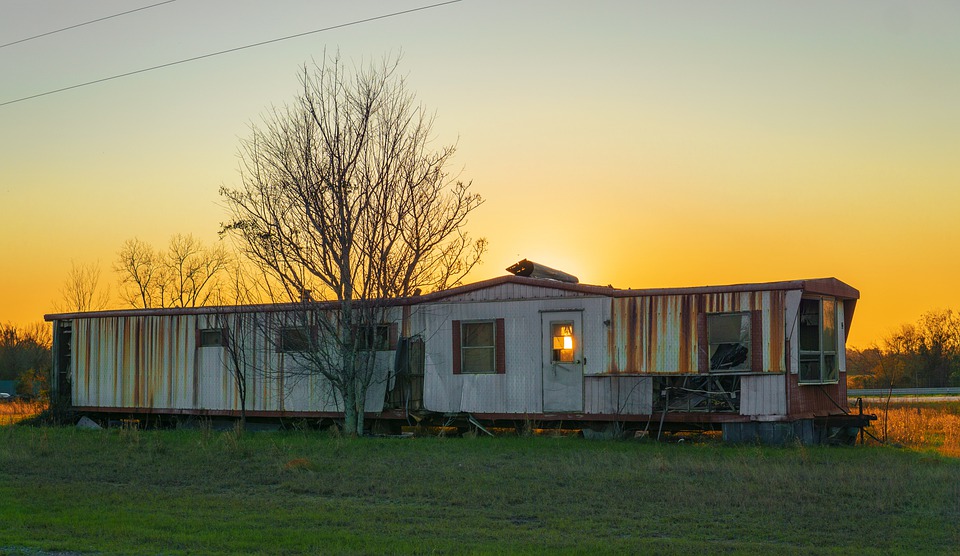
I hadn’t been to the trailer just outside Pending, Kansas in about five years but I’d lived there the summer after I’d graduated college, working in a warehouse nearby. Ronnie and I had split the costs and I’d had my own bedroom but we’d made out a bunch of times. We’d split up that fall when he’d gotten a job in Kansas City and I’d started working back in Wichita. We kept in touch and I knew that Ronnie’s family still rented out the trailer but I didn’t expect Ronnie to get a hold of me about the trailer.
And I hadn’t expected him to sound so desperate.
“I’m really glad you could make it out here, Billy,” Ronnie said as we stood in the driveway, surrounded by brown grass about as tall as my knees. I could see the water tower and grain elevator in the distance. I was a city kid but I’d loved it out here.
“This was my parent’s idea,” Ronnie said. “They’re really having problems with the place and I thought about calling you.” I gave Ronnie the once over. He still had the blonde hair, blue eyes, a dazzling smile and a little bit of a beer gut. That was part of the reason I was helping him move his Mom’s big potted fern into the living room.
“Uh, what do you mean?” I asked. “I don’t do plumbing.”
“I wish it was that easy,” he said.
The trailer hadn’t changed a lot in three years, it was still old and battered but inside the carpet was clean, it didn’t stink and a lot of the furniture I remembered was still there.
“When did the…funny stuff start?” I asked. I was gathering that was why Ronnie got a hold of me. I’d gotten a reputation for dealing with the weird, which had a knack for acting up when I was around. I’d never seen anything strange when we’d lived there.
“About a year after we moved out,” Ronnie said. “My folks rented to some couple and they left a couple of months later, pretty much in the middle of the night. They left a mess. Fur and vegetables all over the place in the trailer.”
“Vegetables?” I asked.
“Yeah. Onion peels and lettuce and stuff,” Ronnie said. “My folks paid to have it cleaned up and then they started renting it out. The next couple, they were in their thirties, lasted about five weeks. Then they rented it out to some old man and he only stayed here about a week. Then they rented it out to a couple of kids from the JUCO.” Ronnie shook his head. “They left in the middle of the night and didn’t even take the cases of beer they brought.”
“Anything else I ought to know?” I asked.
“The only thing anybody said was that they heard some kind of heavy breathing,” Ronnie said. He grinned. “Not over the phone, all through the trailer. And always at night.”
“So, I take it you had all this checked out?” I asked.
“Yeah, I talked my folks into hiring some guy to check the trailer out with some electronic gizmo, looking for electronic devices, speakers and the like. He said the electromagnetic field was, well, funny.”
“Oh boy,” I said. “So, what do you want me to do?”
“This thing wasn’t happening when we lived here, so I figure we stay here a couple of nights and check it out.”
“Nights?” I asked in dismay.
“Yeah, nights.” Ronnie said. “That’s when the stuff usually starts.”
“Terrific,” I grumbled to myself.
I was getting used to this. I’d had some weird things happen to me and I was getting a reputation among my friends as being “a walking magnet for the walking dead” as one of them put it. But I didn’t have anything to do for a few days and I’d kind of missed living out here even if Ronnie and I weren’t anything other than friends anymore it could still be kind of nostalgic. Besides if things got weird I could sleep in my car.
“Gimmie an hour or so and I’ll be back,” I said.
The main drag of Pending, KS hadn’t changed a lot and it didn’t take me long to check a few things in the town library, mainly by asking a few questions from the librarian who remembered me from the summer I’d lived there. I grabbed a burger and a soda and sat in the convenience store (one of Downtown Pending’s few businesses that wasn’t boarded-up.) and searched the internet. By the time I finished the soda I had found what I wanted. Or maybe didn’t want.
“The couple who lived here after we did were the Curtises,” I said as Ronnie and I sat in the darkening living room of the trailer sipping more soda.
“Yeah, I remember,” Ronnie said.
“Mrs. Winters at the Library told me they came in and borrowed a bunch of books on spiritualism and stuff like that. They said something about already having an Ouija board. And the records I found said that this is the only structure ever built on this land. The Indian…I mean, Native Americans were in the area but I found a reference to the Tribes saying there was a ‘bare place’ they would not go near. They said there was something ‘old and to be feared’ there, or rather, here.”
“Here?” Ronnie said. “I used to mow all over here. There’s no bare place on the ground, just grass that grows too fast. I used to mow it.”
“Yeah, I remember. Except right where this trailer is sitting. I think the Curtises held a séance or a bunch of them and called something or woke it up. Maybe something prehistoric.”
“A Prehistoric ghost?” Ronnie said smiling.
“Or a demon.”
Ronnie’s smile vanished. We sat there in silence. As it grew darker I heard the wind outside. I remembered a poem I’d read once, something about the wind across the prairie whistling in the tall, tall grass. I looked up with a start. The sound of the wind was inside the trailer. Rhythmic.
Something was breathing.
I looked around; I could see the lights on the top of the grain elevator through the window. Right under that was the bulk of the couch. Wait; We were sitting on the couch, whatever that was wasn’t the couch. It was moving slowly. In the dark I saw it had a paw and claws. It was munching on the fern Ronnie had brought in. As I grabbed Ronnie’s arm and pulled him out the front door my mind raced with the results of my search for the previous inhabitants of the area; I’d read a bit about Prehistoric Sloths. They had been here millennia ago, furry and vegetarian.
This one was still here. At least it’s ghostly essence was.
We were outside before I realized Ronnie was screaming. When he stopped and we realized the thing wasn’t coming after us Ronnie managed to blurt out “How do we get rid of that?”
“We don’t,” I said. “Maybe call an exorcist. Meantime, lock the door and leave the trailer alone.”
“Yeah,” Ronnie said. “Hey, follow me in your car. You can sack out at my Mom and Dad’s. I still have my room in their basement.”
“Sounds good,” I said. My heart was still pounding. “Your folks have any of that beer the Curtises left behind?”
—end—
AUTHOR’S NOTE: Continuing my celebration of weekly flash fiction stories for five years, I’ve published a couple of stories about Billy Gonzalez and his knack for stumbling across the weird in places other than this blog. He had to appear to celebrate this anniversary and bring some spookiness with him!
Wrote a couple of the weekly Flash Fiction pieces as well as the Monthly Flash Fiction Draw Challenge story. Did that one fast–I based it a little on a story I was going to send to Weird Tales in the 90s but never got it out of synopsis. Started next week’s Friday Flash story and wrote a page on the mystery/crime story for an anthology with a deadline of this Halloween. Also finished the QSF column and may have gotten ahead on the column for next month.
When you’re sixteen the world can swirl around you.
That happened to me literally at the Kansas State Fair in 1978, but I wasn’t planning on it. Mark Dundee and I went to the fair to ride the rides, look at the livestock, eat and check out girls. I hadn’t figured out for sure that I also liked guys but I didn’t tell Mark that. Anyway, we both went to school in Millington but Mark’s Granddad owned a farm just outside Pending about fifteen miles away and I went up there with Mark sometimes. We were city kids but we got to help out at the farm. Granddad Dundee grew wheat but he also raised a few chickens and had a cow. Mark and I were city kids but over the last few years we’d gathered our share of eggs and played in the one-hundred-year-old barn across the road, and even made out there once. After getting out of school, Mark’s Granddad picked us up in his truck and drove us to the fair where he essentially turned us loose with combined birthday money and money we’d earned on our summer jobs.
That Friday we wandered around, kicked at the straw under our feet, smelled the smells and gawked at the show chickens, looking like something glowing and colorful from another world. And, of course, we rode the rides. Our favorite was the swing ride. It spun you around while you were sitting on (and securely belted in!) swings like the ones on the grade school playground Mark and I swore we’d grown out of. We rode the swing ride about five times, laughing and looking down at the colorful tops of the fair tents along the midway and then up at the swirling, spinning sky, going dark with dusk, stretching out forever and never ending. The last time I got off the ride and everything was swirling around me. I shook my head and closed my eyes.
When I opened them, things were different. I looked around and Mark was gone. Some of the rides looked the same but I saw a hot dog booth and the prices of the dogs had gone up. I glanced at the people; nobody was wearing bell bottom jeans, most of the guys were clean-shaven. I shook my head a minute. Suddenly Mark came around the corner. He was taller and his face had cleared up. He was laughing and holding cotton candy in one hand and the hand of some girl in the other. They kissed.
I shook my head again; was this the future? I knew I had no chance with Mark but why was I seeing this? I glanced down at one of the programs blowing across the ground. I caught a date: 1989.
Eighty-Nine?
I heard Mark’s voice.
“I’ve been coming here every year since I was a kid. My best friend Jayce and I came here all through school.”
“You should have called him up,” the girl said.
“Naaah, he lives in California. We haven’t seen each other in years. Hey, let’s…”
I blinked my eyes and it was 1978. Mark was tapping me on the shoulder.
“Hey, Jayce, let’s get some cotton candy!” Mark said, decked out in his WKRP t-shirt.
“Uh, yeah,” I said. “Sure.”
Life spins around too, I thought. Soon, you step off and everything’s different.
I looked up at the stars. Enjoy it all while it’s happening, they seemed to say.
What We Found in the Back Room at Viterbo’s Pawn and Loan
by Jeff Baker
When you work in essentially a large concrete box with a big window it gets hot, even in the winter. I’d worked at the old Viterbo’s Pawn and Loan on Fifth Street since I was a senior in High School five years ago and I’d gotten to the point where in winter I kept my jacket in my car. In summer we opened the side window and cranked the AC. in the back room. Why Mr. Ricker didn’t spring for an extra air conditioner (we sold enough of them) was beyond me. But he was almost never there and let his employees run things and he didn’t harass us so I was fine as long as I could still live with Mom and Dad. That made the whole job affordable. Besides, at five thirty p.m. I got to check out golden, gorgeous Cesar when he came in for the night shift. He was big, muscular and nobody messed with him. He was also straight but I checked him out and sighed inside; I doubt he ever realized. Margie (the girl I worked with in the day) knew and we kidded about it all. I was wiry, she was kind of dumpy and sweet and we got along.
The back room at the pawn shop hadn’t really ever been cleaned out. There were boxes stacked on top of chairs, a stack of tires, several dismantled record players, radios and even an old reel-to-reel tape player; Wollensaki or something. It wasn’t a firetrap but it was cluttered. Mr. Ricker said most of it had been there when he bought the place a decade earlier. I found an old “Secrets of Astaroth” comic book in a plastic bag in one of those boxes while trying to find something else. I got an employee discount and took it home.
Anyway, one afternoon we were trying to fix the blinds so we could close them so it wouldn’t be so hot when the plastic thing holding up one end of the blinds snapped and the blind fell down propped at an angle pointing at corner of the window.
“It looks like one of those graphs in USA Today,” Margie said.
“Yeah,” I said. “Like: ‘Peaches are popular with college guys!’ Or something.”
“We need to fasten that end with something,” she said. “Until El Cheapo splurges to have those blinds repaired.”
“Too bad it isn’t winter, I’d have my scarf in the car,” I said.
“Hey, wait a minute,” Margie said suddenly rushing to the back room through the doorway behind the register. A moment later she returned with a small coil of rope wrapped around her shoulder like Indiana Jones.
“How’s this?” Margie asked holding the rope up like it was a string of Christmas lights.
“It’ll work for now,” I said. “At least it’s not thick enough to tie the Love Boat to the dock. Bring it over here.”
We didn’t have a lot of customers that afternoon which was good. It must have taken about half an hour to figure how to tie the end of the blind up. It wouldn’t attach to the broken plastic it had been hooked to but there was a pole hanging from wires from the ceiling which was only about a foot away from the top of the window. We’d hung leather jackets that were for sale from there so they could be seen from the window. Now we had the rest of the rope tied to the bar supporting the window blind which we were able to lower partway. We stepped back and surveyed our handiwork.
“Looks good,” Margie said. “Kinda reminds me of building a fort out of sofa cushions and blankets in the living room.”
“Oh, yeah,” I said. “Should work as long as that rope wasn’t holding up anything in the back room!”
Margie laughed.
It was close to five and I was ringing up some lady’s purchase of a car radio when I heard a scream. The lady and I looked up. Margie was pointing at the wall.
The slanted sunlight was hitting the wall and casting a shadow of our jury rigged pole with the rope tied to it. In the shadow was something not there; the figure of a man hanging by his neck from the rope. The customer let out a gasp and dropped the car radio she was buying.
I walked over, shaking. It was a gag. It had to be. I felt the wall where the shadow was. It wasn’t a painting or a cardboard cutout. It was the shadow of a hanging man. It was turning slowly like hanged man I’d seen in a western on TV once. But that had been a movie stuntman. I stepped back from the shadow and when I stepped under where we had tied the rope to the pole I felt like I was passing through something cold.
Something that felt wrong.
In another minute I had pulled the rope off the pole and off the blind which was back to flopping in the window. I looked over; the shadow of the hanged man was gone.
“Where did you find this rope?” I asked.
“I’d seen it in an old wooden crate at the back of the back room,” Margie said. Part of the stuff that had been here since Ricker bought the place.”
“I remember hearing Ricker say he’d bought the place from the previous owner after he’d been found dead…” My voice trailed off.
The front door opened and Cesar walked in, looking hot but I didn’t care.
“Hey guys,” he said. “What’s new?”
The rope felt cold. I dropped it to the ground.
—end—
AUTHOR’S NOTE: The draws for this month’s Flash Fiction Draw Challenge were a horror story, set in a pawn shop involving a length of rope. I put on my M.R. James hat and eventually got around to the horror.






 authorjeffbaker